For centuries, Ethiopia has stood as a beacon of independence, identity, and resilience. It is the only African nation never to be colonized. Its script, Ge’ez, predates the Roman alphabet. Its Orthodox Church is one of the oldest in the world.
Yet somehow, in the global art narrative, Ethiopia has remained in the periphery.
That ends now.
The Pillar That Was Always There
Ethiopia is not just historically significant. It is artistically sovereign. From the ancient rock-hewn churches of Lalibela to illuminated manuscripts and richly painted Orthodox icons, Ethiopia has for centuries expressed itself through complex visual languages.
This deep legacy has never stopped producing. A new generation of Ethiopian artists is drawing from it, building on it, extending it — and doing so with a confidence that does not ask for permission.
Ethiopian art is not emerging. It has been here. What is emerging is the world’s willingness to see it.
Why the Global Art World Must Take Notice
The global art establishment is beginning to shift. For too long, the African continent — home to some of the world’s oldest artistic expressions — has been reduced to "tribal" aesthetics or token diversity exhibitions.
Ethiopia offers something else: an artistic tradition shaped by Byzantine influences, forged in Orthodox Christianity, and refined across centuries of independence. It stands alone in form and purpose.
Collectors, curators, and cultural historians alike must understand that Ethiopia is not a trend. It is a source.
A New Model for Artistic Equity
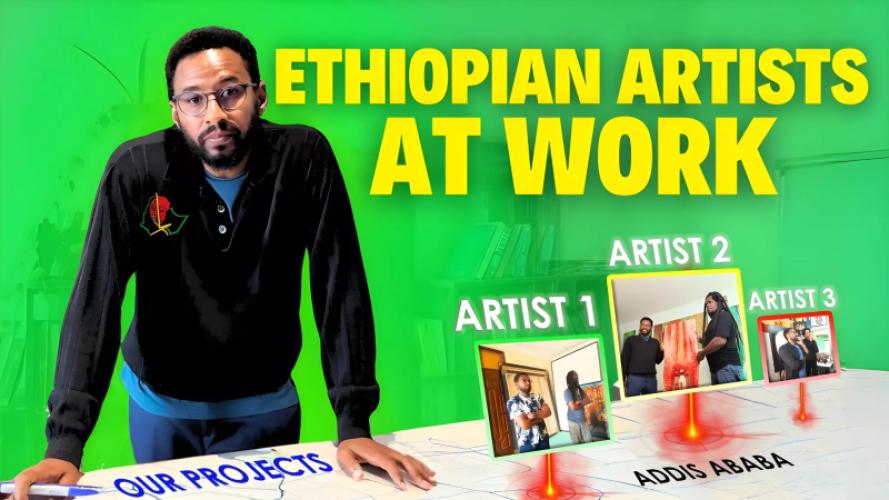
Adulis Ethiopian Art is not just a gallery or a platform. It is a movement — a response to global systems that have exploited African creativity without compensation or control.
By working directly with artists, funding production locally, and promoting intentional scarcity over mass exploitation, Adulis is transforming the way Ethiopian art is made, valued, and shared.
Through exhibitions, critical publications, partnerships with institutions, and storytelling that speaks beyond the canvas, Adulis is building a global bridge — one rooted in respect, artistry, and long-overdue recognition.
The goal is not just to feature Ethiopian art. It is to reframe art history with Ethiopia present at its centre — not as a curiosity, but as a foundation.